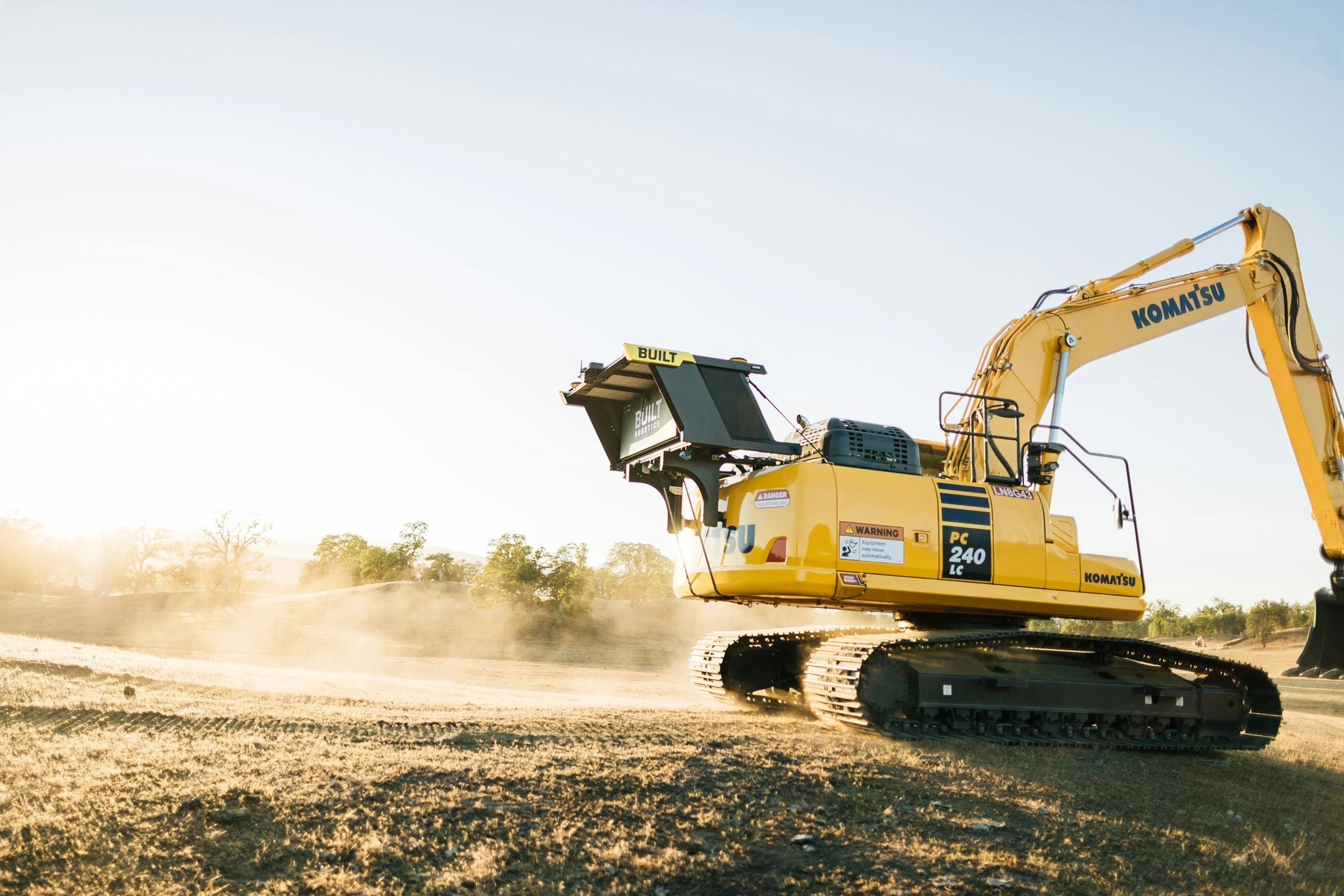
A full-size autonomous excavator on a dusty construction site at sunset; industry context photograph

Advancing Construction Machine Autonomy on Earth and Beyond.

The robot digs under human control.

Teleoperation.We developed this robotic excavation testbed to collect operator demonstrations.
Demonstration collection.Robot states and visual observations are recorded together for learning.

Challenges to autonomous excavation

Data challenge

Repeated motions add little useful guidance.The recording grows without showing a new way to complete the task.

Poor demonstrations make reliable learning harder.

Our solution learns from keyframes and visual goals.
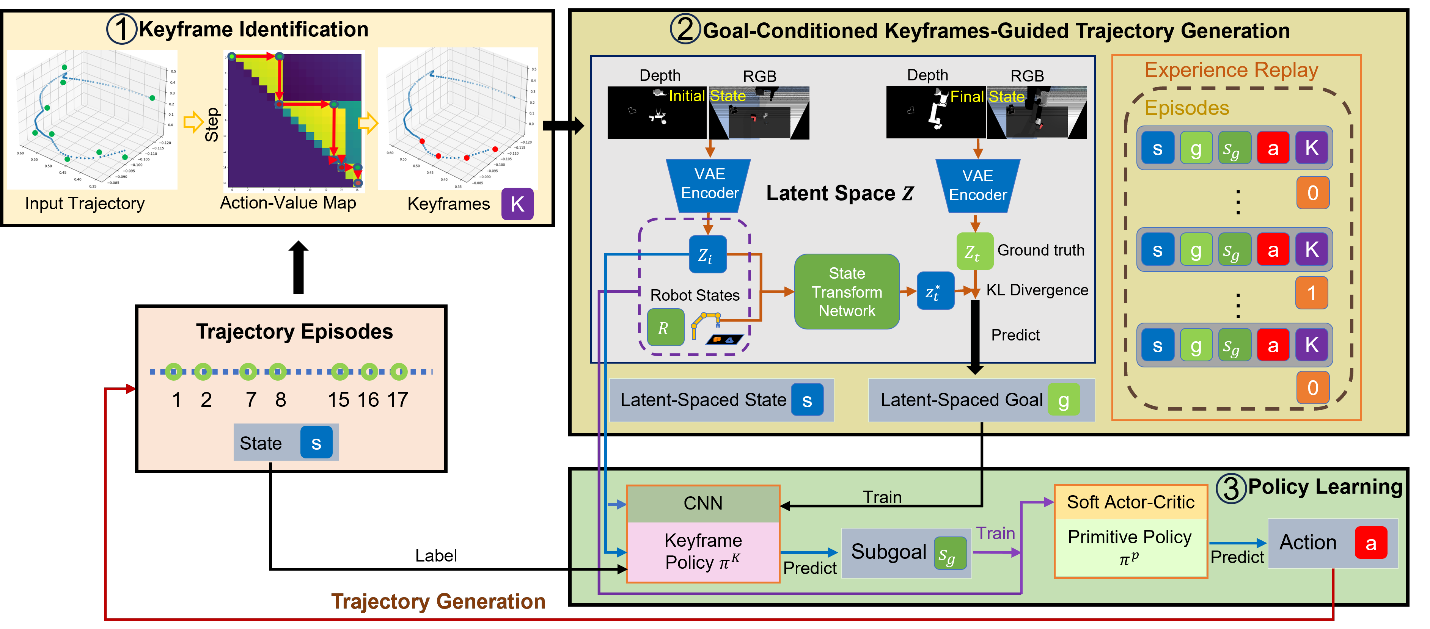
Keyframe selection and action-bound visual representations guide a high-level subgoal policy and a low-level action policy
Keyframes and visual goals guide two policies: one chooses subgoals, the other generates actions.

Visual input

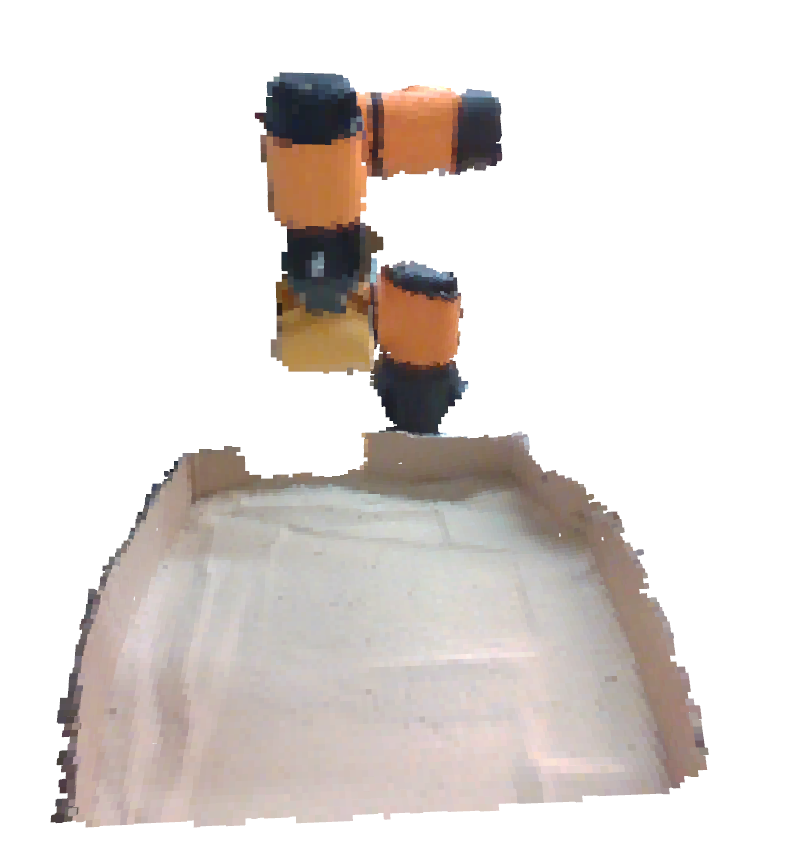
Calibrated point cloud aligned with the robot’s working space
Align the observed scene with the robot’s coordinate frame.

Excavation goal

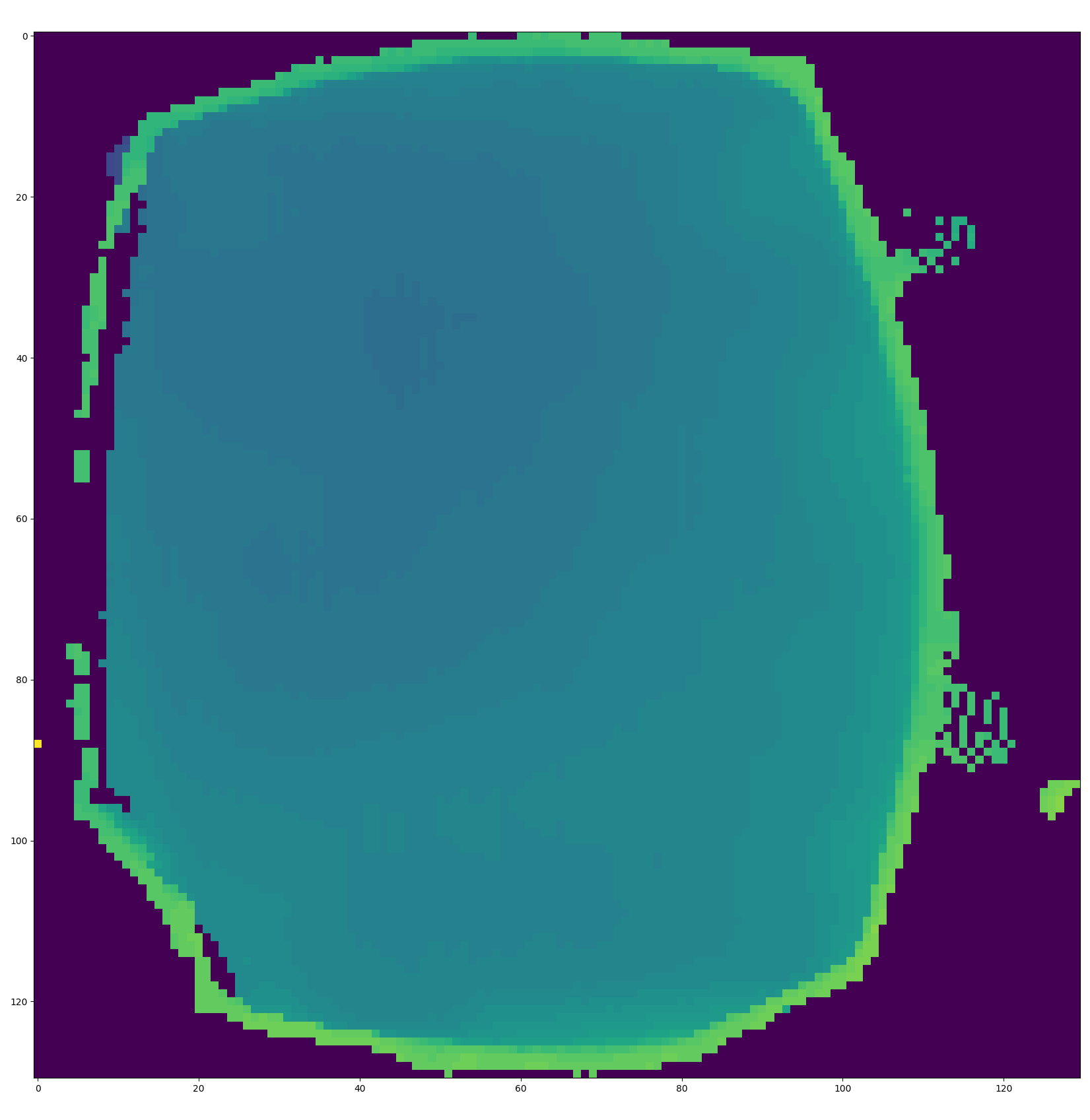
Current terrain contourCurrent terrain
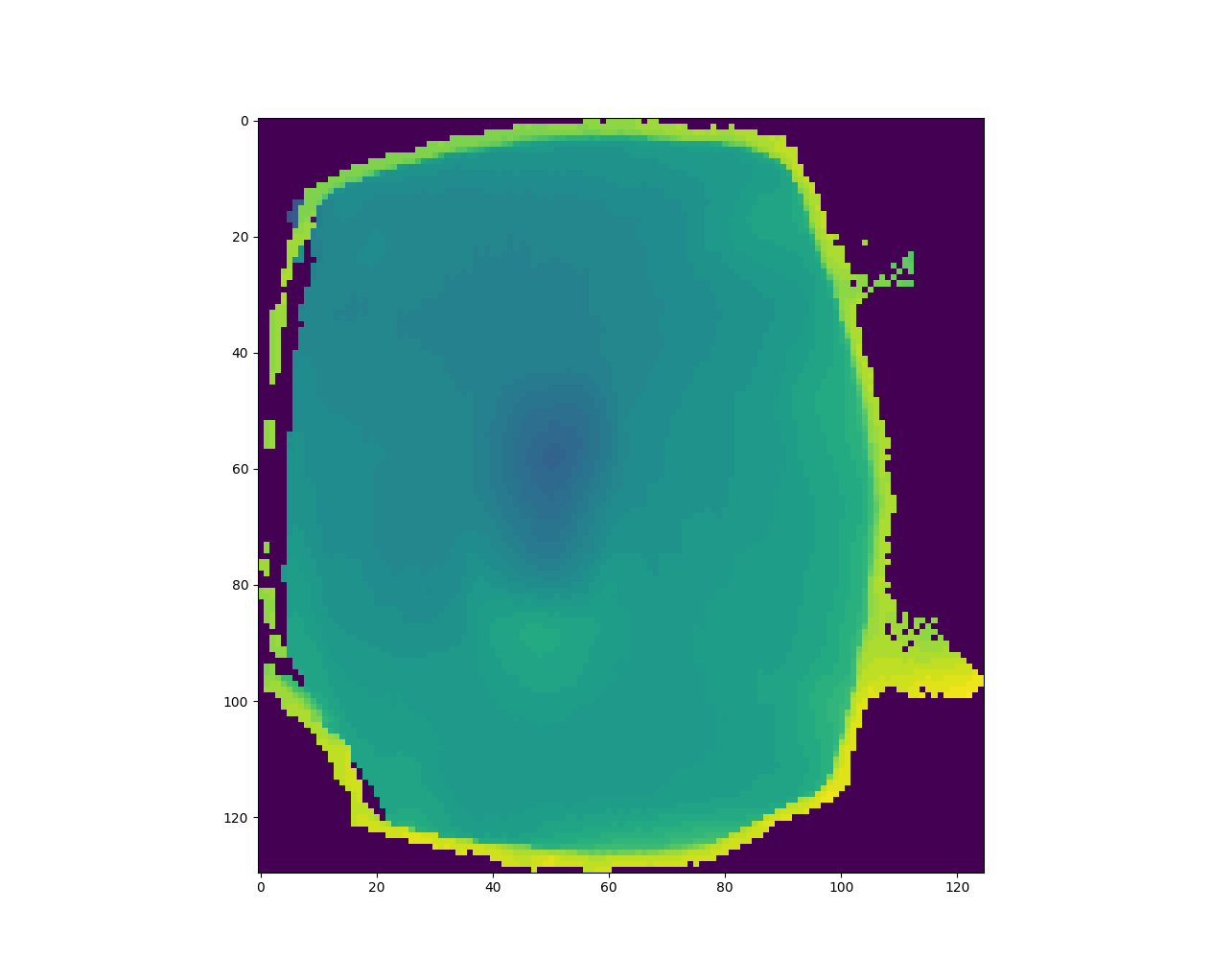
Desired terrain contour with an excavation depressionTarget terrain
Current and target contours describe the desired terrain change.

The learned policy improves excavation success.
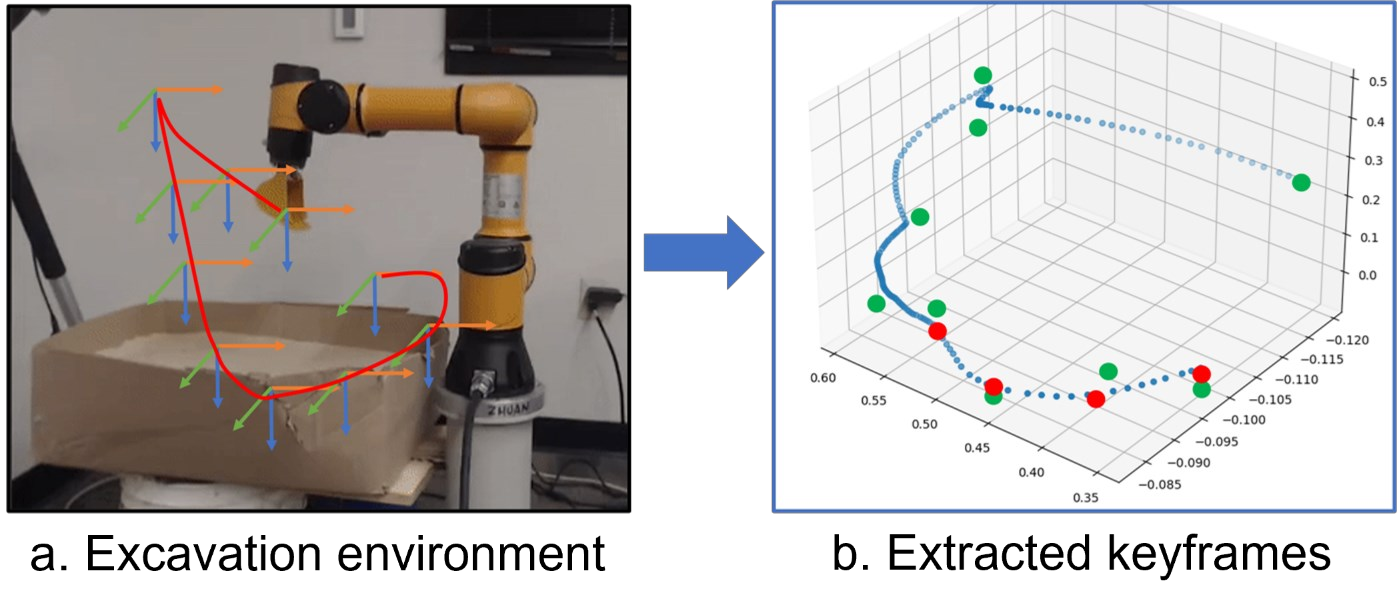
Selected keyframes marked as red points along a recorded robot trajectory
Keyframes preserve the essential motion.The selected poses provide a more compact demonstration for training, with fewer redundant frames.
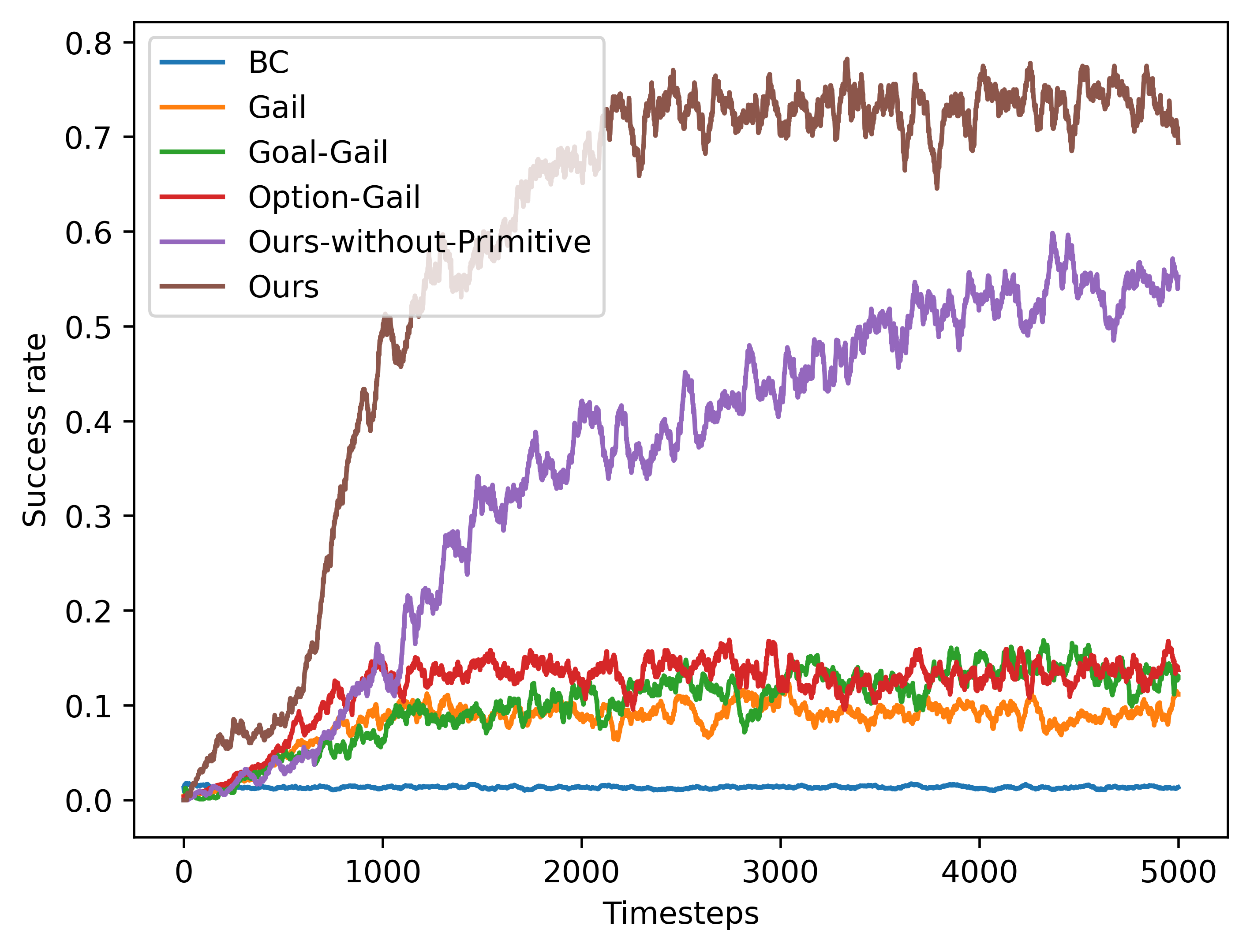
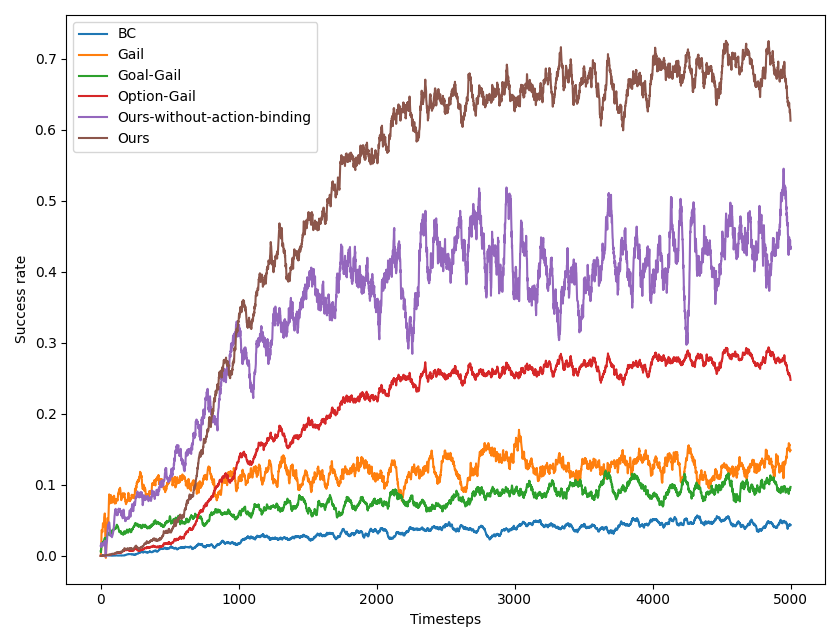
Excavation with a specified terrain goal.In simulation, the full policy improves task success over the compared methods, including the version without the policy that learns motions between subgoals.

Simulation comparison

Simulation success-rate comparison with a specified terrain goal; the proposed method outperforms the compared methods↗ Enlarge
Brown curve: proposed method.
Excavation with a goal learned from vision.The visual policy improves task success over the compared methods without requiring a manually specified final goal. Linking visual features to robot actions improves learning.

Simulation comparison

Simulation success-rate comparison with a learned visual goal; the proposed method outperforms the compared methods↗ Enlarge
Brown curve: proposed method.

Extending our research toward lunar excavation.
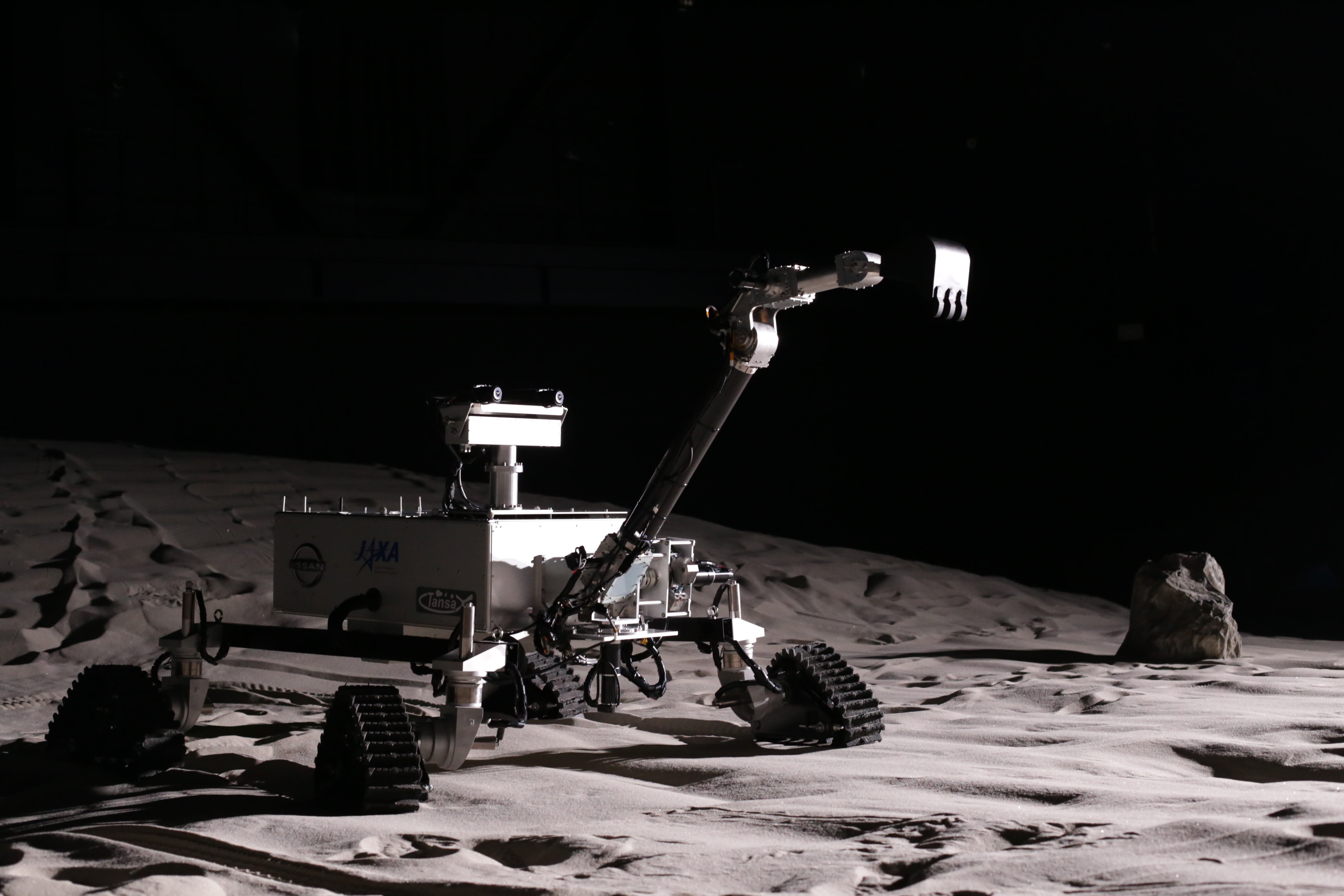
A real JAXA lunar-rover research prototype with four tracked units, a single articulated digging arm, and a bucket in a simulated lunar terrain test facility
JAXA–Yanmar single-arm excavation research, ground experiment, 2023. Courtesy of JAXA.

We aim to extend demonstration-based excavation learning to robotic arms working with lunar regolith, where communication delays make continuous remote control difficult.

Publication

Cite the featured paper
BibTeX
@article{li2024teleoperation,
  title   = {Teleoperation-Driven and Keyframe-Based Generalizable
             Imitation Learning for Construction Robots},
  author  = {Li, Yan and Liu, Songyang and Wang, Mengjun
             and Li, Shuai and Tan, Jindong},
  journal = {Journal of Computing in Civil Engineering},
  volume  = {38},
  number  = {6},
  pages   = {04024031},
  year    = {2024},
  doi     = {10.1061/JCCEE5.CPENG-5884}
}

Data, models, and code are available from the corresponding author upon reasonable request. Author manuscript ↗

Research figure
Open full-size image ↗